The short answer
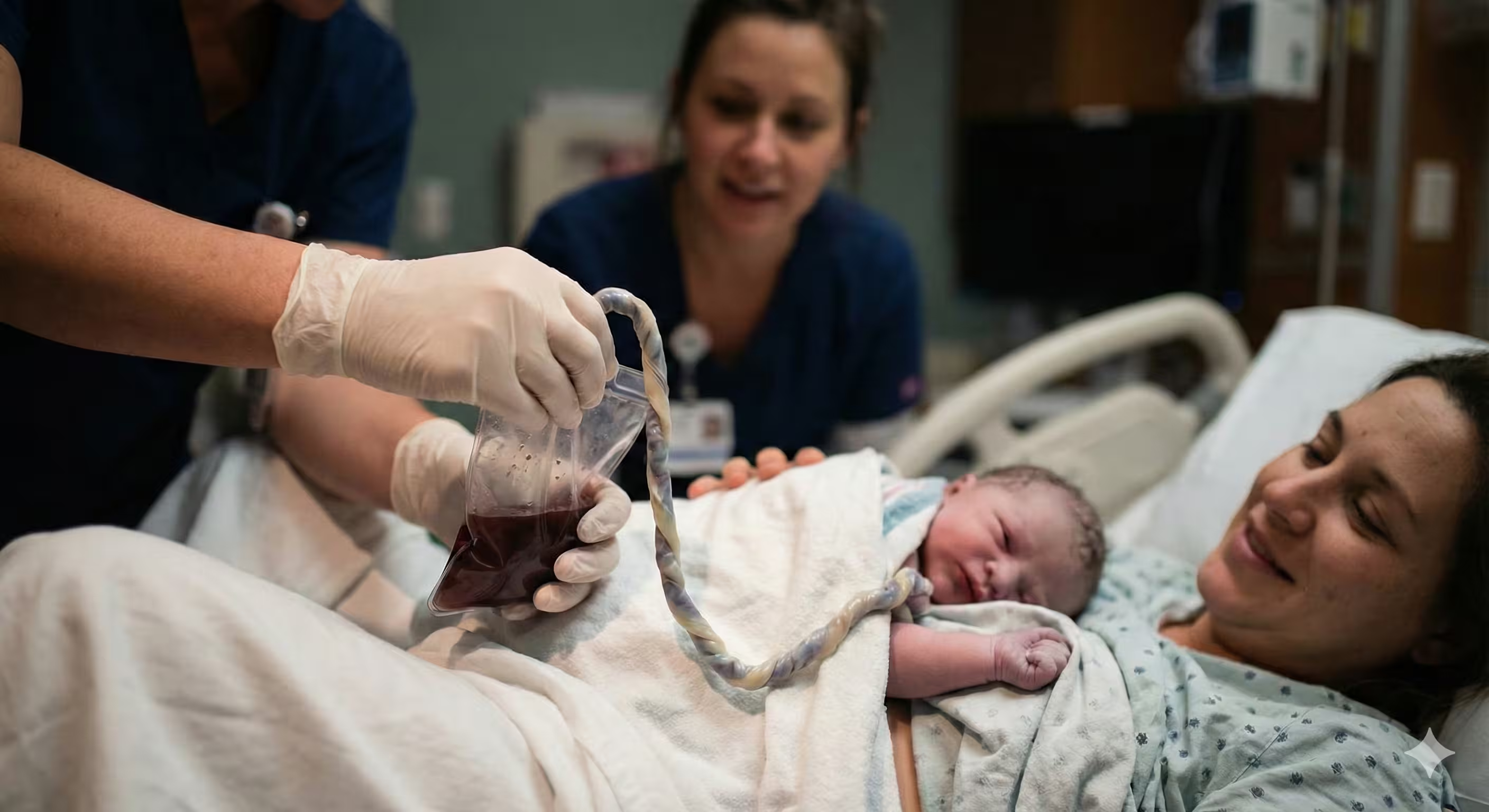
Yes. Cord blood can be collected after a caesarean section (C-section), planned or emergency, just as it can after a normal delivery. The blood is taken from the umbilical cord after your baby is born and the cord has been clamped and cut, so it is painless and does not touch your baby. Your care and your baby's care always come first; collection happens only when the delivery team is ready.
Why so many Indian parents ask this
C-sections are common in India. In the latest National Family Health Survey (NFHS-5, 2019–21), about 1 in 5 births in India (21.5%) were by caesarean, and in private hospitals the figure was almost half (49.7%) (source). If you are delivering in a private hospital, there is a good chance your baby will be born by C-section, even if you are planning a normal delivery.
How collection works during a C-section
- Your baby is born and handed to the paediatric team as usual.
- The cord is clamped and cut at the time your obstetrician decides. Collection never changes this timing.
- The doctor collects the blood left in the cord into the sterile bag from your collection kit. Depending on the hospital's practice, this is done while the placenta is still in place or just after it is delivered. It takes a few minutes.
- A small sample of the mother's blood is usually taken for routine infection screening.
- A medical courier takes the kit to the lab, where the sample is tested, processed and frozen.
In an operating theatre, the team's first job is you and your baby. If either of you needs urgent attention, collection may be skipped. That is the right decision, and international guidance from obstetricians says the same: collecting cord blood must never get in the way of care for the mother or the newborn (ACOG Committee Opinion 771).
Planned C-section or emergency C-section
| Planned (elective) C-section | Emergency C-section | |
|---|---|---|
| Before the day | Enrol as early as you can and tell your obstetrician and the hospital you are banking. | Enrol as early as you can and keep the kit in your hospital bag, so it is there even if plans change suddenly. |
| On the day | Hand the kit to the theatre team when you are admitted. | Ask your partner or a family member to give the kit to the nurse and call the bank's 24/7 number. |
| Chance of collection | Usually straightforward, because the team knows in advance. | Still possible in many cases, but care comes first, so collection is not guaranteed. |
Does a C-section change how much cord blood is collected?
Not in a way that should change your decision. Studies have looked at this, and results vary. For example, an Italian study of 393 cord blood units found that units from caesarean births had a slightly larger volume on average (95 ml vs 85 ml), slightly fewer total cells, and no meaningful difference in CD34+ stem cells, the cells doctors look at most closely (source).
The type of delivery is only one factor. How long the baby was in the womb, the baby's weight, the size of the placenta and the skill of the person collecting also make a difference. Every sample is tested at the lab, and the bank tells you what was collected.
What about delayed cord clamping?
Many doctors now wait before clamping the cord, because it helps the baby's iron stores. The World Health Organization recommends clamping no earlier than one minute after birth for most babies, and this applies to C-sections as well. A longer wait can leave less blood in the cord to collect, but your baby's needs come first. Talk to your obstetrician about the timing before the birth, and follow their advice.
Your C-section checklist
- Enrol as early as you can in your pregnancy. The earlier you enrol, the sooner your kit is ready.
- Tell your obstetrician and the hospital that you are banking your baby's cord blood.
- Keep the kit in your hospital bag as soon as it arrives.
- Save Cryovault's 24/7 number, 1800 1024 026, in your partner's phone as well as yours.
The bottom line
A C-section does not rule out cord blood banking. Most of what decides a good collection happens before the day: enrolling early, telling your doctor, and keeping the kit with you. If your baby arrives by caesarean, the collection itself is the same quick, painless step after the cord is cut.
Have a question about your own delivery? Book a free consultation or message us on WhatsApp.
Related guides: How Is Cord Blood Collected? · How Cord Blood Travels to the Lab · Stem Cell Preservation Cost in India